
Early detection
Prompt screening and evaluation remain central to successful treatment.

Full treatment spectrum
Surgery, radiation, chemotherapy, and hormone-based treatment planning.

Holistic approach
Compassionate, patient-centered care from diagnosis through follow-up.

Types of breast cancer
There are different subtypes of breast cancer, each behaving slightly differently. The most common types are:
- Invasive ductal carcinoma starts in the milk ducts and spreads to surrounding breast tissue.
- Invasive lobular carcinoma originates in the milk-producing lobules and spreads beyond.
- Ductal carcinoma in situ (DCIS) is a non-invasive form of cancer confined to the milk ducts, considered precancerous.

Symptoms of breast cancer
While a lump is a common symptom, breast cancer can present in various ways. Be aware of any changes in your breasts, including:
- A new lump or thickening in the breast or underarm area.
- Changes in the size, shape, or appearance of the breast.
- Dimpling or puckering of the breast skin.
- Nipple inversion (nipple turning inward).
- Nipple discharge (bloody or clear fluid).
- Changes in the skin texture or color of the breast.
Stages of breast cancer
Early detection is crucial for successful treatment. Breast cancer is staged based on the size and spread of the tumor:
Stage 0
Stage 0: This is the earliest stage, where cancer cells are confined to a very small area.

Stages I and II
Stages I and II: These stages indicate early-stage cancer, with a good prognosis.

Stages III and IV
Stages III and IV: These are considered later stages where cancer may have spread to lymph nodes or other organs.
Early detection
Early detection is crucial for successful treatment.
Confirming the diagnosis
If you experience any of these symptoms, a breast specialist will perform a physical exam and may recommend further tests like:
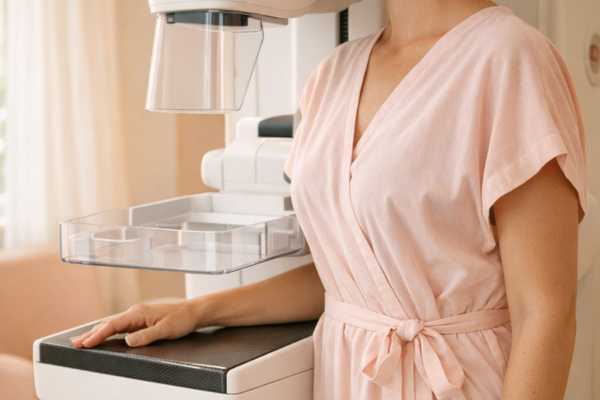
- Mammography: An X-ray of the breast tissue to detect abnormalities.
- Ultrasound: Uses sound waves to create images of the breast, helping differentiate between cysts and solid tumors.
- Breast biopsy procedure: A small tissue sample is extracted for laboratory analysis to confirm the presence and type of cancer cells.
Common treatment options
The course of treatment depends on the stage and type of breast cancer. Common treatment options include:
- Surgery: This may involve lumpectomy (removal of the lump) or mastectomy (removal of the entire breast).
- Radiation therapy: Uses high-energy rays to kill cancer cells.
- Chemotherapy: Powerful drugs to destroy cancer cells throughout the body.
- Hormone replacement therapy (HRT): May be used if the cancer cells are fueled by hormones like estrogen.
Risk factors
Certain factors can increase your risk of breast cancer, including:
- Age: Risk increases with age.
- Family history: Having a close relative with breast cancer increases your risk.
- Genetic mutations: Inherited gene mutations like BRCA1 and BRCA2 significantly elevate risk.
- Dense breast tissue: Breasts with more glandular tissue and less fatty tissue are denser and may be harder to detect lumps through mammograms.
- Lifestyle factors: Obesity, lack of physical activity, and alcohol consumption can increase risk.
Research and early detection
Significant progress is being made in cancer research to develop new and improved treatments for breast cancer. Early detection remains the most crucial factor in successful treatment. Maintaining good breast health through regular self-examinations and scheduling mammograms as recommended by your doctor are vital steps in the fight against breast cancer.